Senator Rick Scott’s support of Herschel Walker’s ‘Georgia values’ confirms it
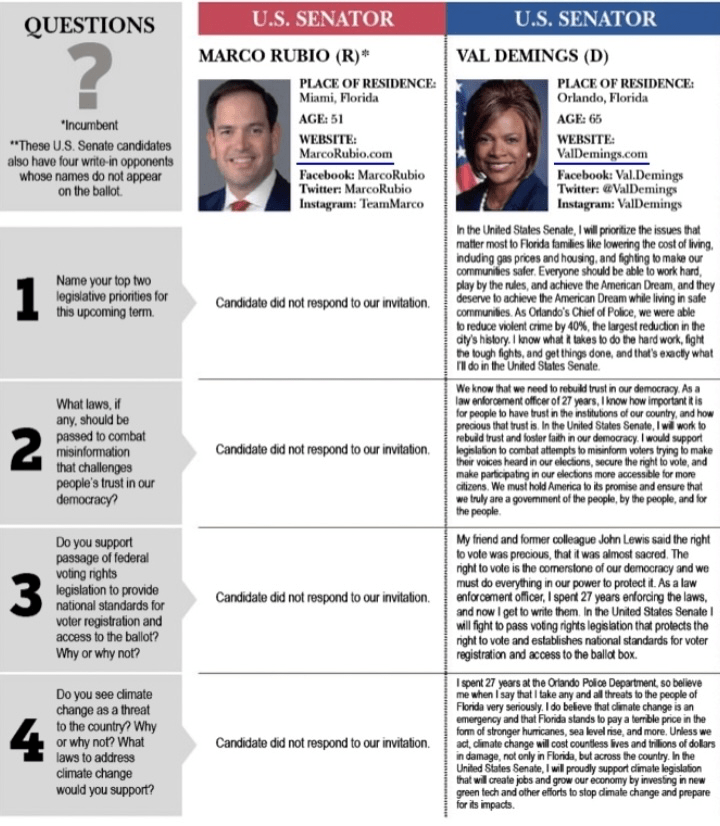
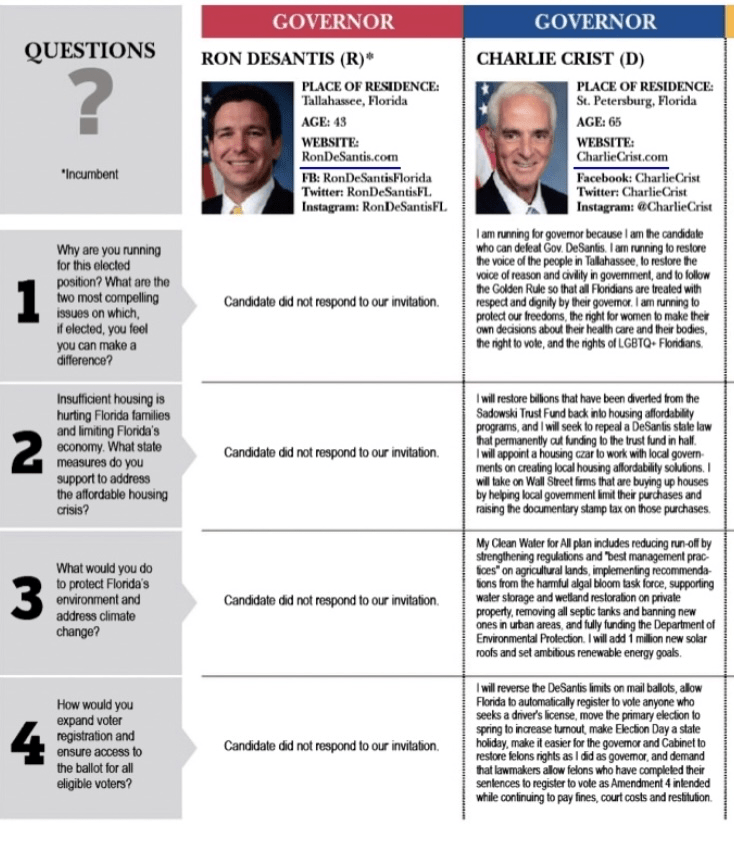
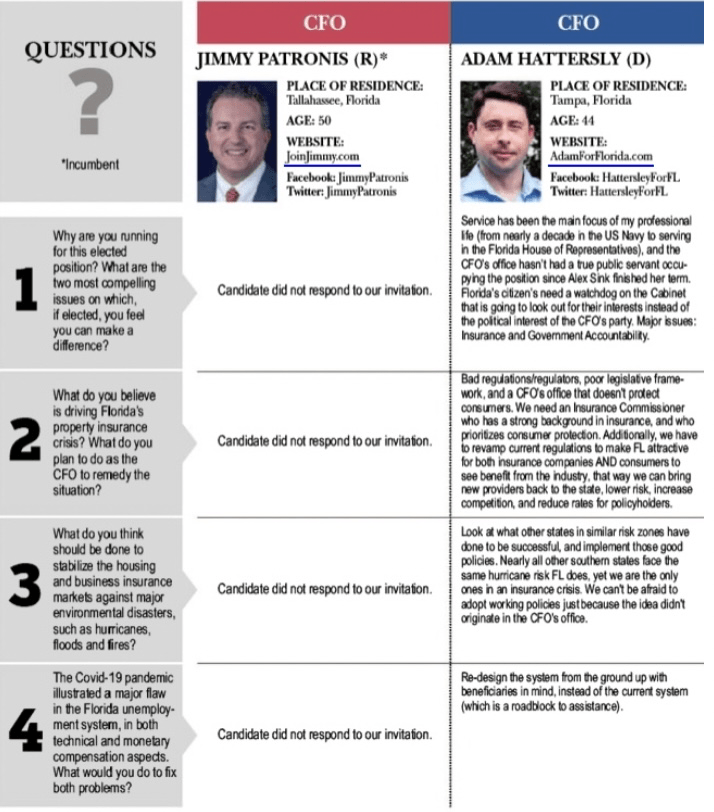
A funny thing happened on my way to fill out my mail-in ballot. The Palm Beach Post published a comprehensive and important League of Women’s Voters (LWV) Non-Partisan voters’ guide. Guides like this are critical if voters are to make informed decisions about candidates without the taint of partisan, and often dubiously correct, political ads.
In creating and publishing the guide, the LWV might not have realized the unintended consequences it created for the GOP. There were 26 partisan races in the guide for my and neighboring districts, from U.S. Senate down to Port of Palm Beach Commissioner. The guide asked four questions to each of the candidates in these 26 contests. The Democratic candidate answered the questions in every case. But only 12 Republican candidates, less than half, provided answers. According to the LWV, the silent 14 “did not respond to our invitation.”
Importantly, among the 14 non-respondents were:
Senator Marco Rubio
Governor Ron DeSantis
Attorney General Ashley Moody
CFO Jimmy Patronis
I can’t imagine a better example of GOP arrogance, of the party’s desire to win and maintain power, but not to actually govern and address the issues affecting their constituents.
Wait, what? There is, if not a better example of GOP arrogance, at least one that is equal in its cynicism and quest for power:
Rick Scott, Florida’s Republican junior senator, who is also the chair of the National Republican Senatorial Committee, announced yesterday that he will campaign for Herschel Walker in Georgia on Tuesday amid a firestorm spurred by reports the Republican Senate candidate allegedly paid the mother of one of his children to have an abortion.
In a statement to The Washington Post, Scott said that Democrats “want to destroy this country, and they will destroy anyone who gets in their way.”
“Today, it’s Herschel Walker, but tomorrow it’s the American people,” Scott said, according to The Post. “I’m on Herschel’s team — they picked the wrong Georgian to mess with. I’m proud to stand with Herschel Walker and make sure Georgians know that he will always fight to protect them from the forces trying to destroy Georgia values.”
Scott did not detail the ‘Georgia values’ that Walker is fighting to protect, but if they’re anything like Walker’s values, I’d put Georgia on my list of places not to visit.
Joining Scott on this Walker ‘do anything/say anything/back anyone to keep the power’ campaign swing is sanctimonious Arkansas Republican senator, Tom Cotton.
By the way, Walker and his opponent, incumbent Democratic senator Raphael Warnock, are set to meet for their first debate on Friday. That should be quite a show!
It took two young men who believe in the power of brotherhood and solidarity.
A little over a year ago I posted a story called, “Poland, America, Racism and Anti-Semitism” (here’s the link: Poland, America, Racism and Anti-Semitism). The story centered on Sharon and my relationship with Poland, Sharon’s Polish familial roots and our many visits over the past 30+ years. Regarding anti-Semitism, I sub-headed the story, “Systemic? Individual actions? When it comes to prejudices, it is, indeed, a small world, after all.”
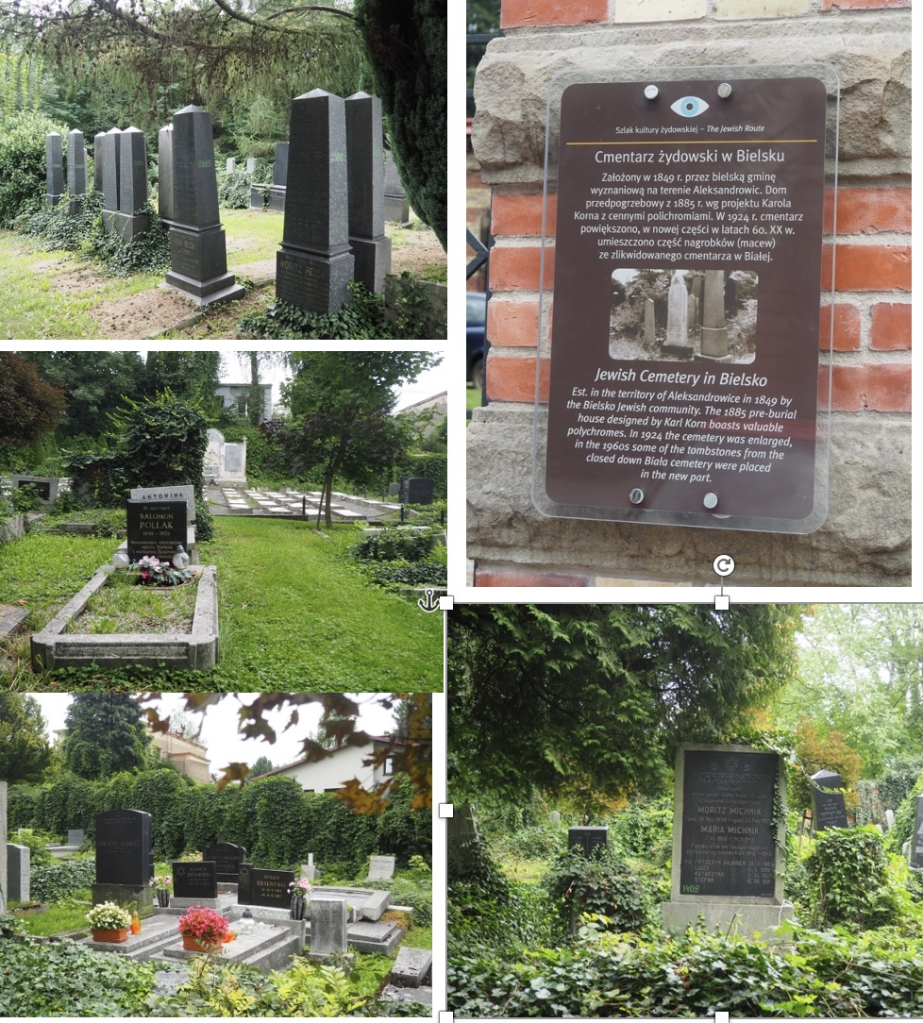
I concluded my story with an article my young Polish friend, Kamila, sent me. The article was called, “For the repair of tombstones at the Jewish Cemetery in Bielsko-Biała, devastated during an act of vandalism,” written by a young Polish man, Jakub Nowak. Jakub’s article told of a break-in and vandalism in a Jewish cemetery in the Polish city of Bielsko-Biała; in all, 67 monuments desecrated. When I learned that the crime was perpetrated 12 and 13 years old kids, I wondered,
“Think about that. Where are these kids getting their hate from? Some might say that this was just prankish behavior on their part. Ok. But, why not the parish graveyard? Why the Jewish cemetery? More than pranks, I think. Despite some gains, Poland has been, and probably always will be, anti-Semitic. Anti-Semitic parents (like racist parents here) raise like-minded kids. Governments and religious organizations, here and there, that won’t cotton to truth in education but dictate curriculum supporting miseducation to further political goals, take over where the parents leave off.“
Kids left handprints after trying to push over monuments.
But Jakub didn’t simply write about the incident. His article was a plea for action:
“This is not only an unacceptable desecration of the place, but also a blow to the history and spirit of the city and its inhabitants. Bielsko and Biała are the cities where we lived and where we still live together; cities that border, not only of Silesia and Lesser Poland, inhabited by not only of Catholics and Evangelicals, but also Poles, Germans and Jews. Multiculturalism is with us even after death, and evidence can be found at the Jewish cemetery in Bielsko, where Muslims who died during World War I are buried. It was, is, and will be.
“Therefore, I am asking for your support. Let us show our brotherhood and solidarity. Bielsko and Biała were famous for their tolerance and respect for other people, regardless of age, sex, nationality or religion. Always walking shoulder to shoulder together. This is our inheritance and intangible heritage. These are qualities we have grown up with and are proud of.”
Last month, Sharon and I traveled to Bielsko-Biała. We visited the cemetery and met Jakub and his partner, Darek Gajny. They are gay – not a great lifestyle in Poland. Neither is Jewish. Yet, Jakub and Darek were so hurt by the violation of this historic, sacred place, they spearheaded the campaign to repair and restore it. And one year later, they succeeded. Not only were the damaged monuments repaired, the rest of the the cemetery was cleaned and renewed.
Kamila, Darek and Jakub
Anti-semitism is not going away. Not here. Not in Poland. Nor is racism or anti-gay sentiment. But, as was the case in Bielsko-Biała, sometimes bad can spawn good.
On a side note, I recently received correspondence about a project Friends of Jewish Heritage in Poland is embarking on to raise funds for the restoration of the Jewish cemetery in Nowogród. Nowogród is the town in which Sharon’s paternal grandparents lived and where her father was born. I’ve been in touch with the organization to see, beyond money, what we can do to help. More to come.
Ralph Kolnick and Ethel Kon Kolnick, Nowogród, Poland
Does Trump also think he can declassify government documents by “plunking his magic twanger” like Froggy the Gremlin?
Some of you are old enough to remember gossip columnist and radio/TV host Walter Winchell’s signature opening:
‘Good Evening Mr. and Mrs. America and All the Ships at Sea’
Today I saw a news clip that’s worthy of Winchell’s legendary introduction. So, without further ado, Mr. and Mrs. America, all ships at sea, everyone on line or in your cars, anyone in range of Around the Block, anyone with a brain, and, most importantly, anyone still wearing a MAGA hat, I give you the former, twice impeached President of the United States, Donald Trump:
In case you couldn’t stand watching this for the entire 51 seconds, here’s the key Q&A:
Q: Is there a process for presidential declassification? A: “There doesn’t have to be a process, as I understand it. If you’re the President of the United States you can declassify just by saying it, even by thinking about it. There can be a process but there doesn’t have to be a process. I declassified everything.”
Sean Hannity, the great journalist, that he is missed the opportunity for a great follow-up question: Does that mean, Mr. President, that you could simply wave a magic wand over the documents to declassify them, let’s say, for example, if you’re too busy to think about it or because you’re deep in thought about when your people will bring you your next cheeseburger?”
If only Uncle Walt Disney was still alive. What an animated film he could produce.
Trumpnocchio
Trumpnocchio
The new animated feature film from Disney with songs like “When You Wish Upon a Star…Makes No Difference How Corrupt You Are;” “A Whole New Trump World;” “Whistle While You Don’t Work;” “Supercalifragilisticexpitrumadoucious;” “Bibbidi-Trumpidee-Boo;” “Trump-A-Dee-Doo-Dah;” and other classics.
On a final serious note, you might have missed this from the Trump interview: “…because you’re sending it [the documents] to Mar-a-Lago or to wherever you’re sending it…”
Wherever you’re sending it? Is he suggesting that there are more purloined documents in other Trump hideaways? Is this a case of “Wait, there’s more!” Merrick Garland, are you listening?
A version of this story appeared as an Op-ed in the September 21 edition of The Palm Beach Post
I recently returned from a trip to Poland where I spent time with my 38-year-old friend, I’ll call her ‘K,’ and her 12-year old daughter, ‘S.’ I met K six years ago. When K was 21, attending university in Krakow, she was assigned a family genealogy project. Since K was Catholic, the most logical starting point was her parish church records. When an elderly priest pointed K to a book of parish records, she noticed that there was a ‘dot’ next to her grandmother’s name.
“Father,” K asked, “why does my grandma have a dot next to her name?”
“That dot means that your grandma was a Jewish child during the war and was raised by a Catholic family,” the priest answered.
K immediately ran home and asked her mother, “Mom, are we Jewish?”
K’s mother put a finger to her lips admonishing K, “Don’t ever tell anyone. It’s our secret and none of our friends should know!”
While K embraced her newfound Judaism, K’s mother, 17 years later, still attends Mass every day so that her friends will see she is a good Catholic, “if it happens again.”
Ironically, K later discovered that her paternal grandfather, a noted surgeon in Poland, was also born Jewish, saved by a Catholic family. While he never attended church as an adult, his way of shunning his heritage was to make antisemitic jokes to friends.
The commonalities to these stories is not just that both K’s grandparents were Jewish, saved by Polish Catholics. It is that both lived their lives in fear of being discovered, using different defense mechanisms to help assuage that fear.
I told K’s story to friends, mentioning that antisemitism still exists in Poland: from the antisemitic graffiti that covers walls in Poland’s third largest city, Lodz, to the young Jewish tour guide, David, who wears a Yankees baseball cap to cover his kippah (skullcap) to avoid bullying (but walks around showing the fringes of his Tzitzit, the ritual undergarment worn by observant Jews – saying, “They think it’s a ‘fashion statement”). I also met a 30-something Polish historian who will not believe, despite all the evidence, that the massacre of the Jews in a small village called Jedwabne in 1941 was perpetrated by the town’s Poles.
My friends couldn’t believe what I was saying. “This is still happening in Poland?,” one asked.
Then I read the editorial in the Sept. 18 edition of ThePalm Beach Post: “Action needed against hate, antisemitism,” which reported antisemitic and anti-social justice posters in Fort Lauderdale, Goyim Defense League distributed antisemitic propaganda in Coral Gables, Parkland and Boca Raton, swastikas marring the walls of a high school bathroom in Davie and flyers praising Hitler distributed in Boca’s Lake Wyman neighborhood … while the ADL “identified more than 400 instances of white supremacist propaganda being distributed in Florida from January 2020 through August of this year. Antisemitic incidents increased 50 percent from 2020 to 2021, from 127 to 190.”
I will send K the editorial, knowing that she will take little comfort in learning “this is still happening in America.”
As Donald Trump, Lindsey Graham and other GOP leaders use their First Amendment rights to predict (and incite) riots in the streets, is it time to re-look the idea of Freedom of Speech?
The First Amendment of the U.S. Constitution reads,
Congress shall make no law respecting an establishment of religion, or prohibiting the free exercise thereof; or abridging the freedom of speech, or of the press; or the right of the people peaceably to assemble, and to petition the Government for a redress of grievances.
One Amendment that allows the establishment and practice of religion, the right to free speech and a free press and the right to peaceably assemble. All important, logical and acceptable rights in a democracy. Except when they’re not. Particularly regarding the freedom of speech when that speech is expressed by senior public figures, speaking from a media soap box that allows that speech to be readily distributed and interpreted by their followers and acolytes as a call to action against the rule of law and as open and/or coded incitements to riot.
Case in point #1: Senator Lindsey Graham, Republican of South Carolina
Graham, once an unapologetic Trump critic, now his most vociferous sycophant, forecast recently that there will be “riots in the streets” if former President Donald Trump were to be criminally charged over the cache of classified documents hauled out of his Mar-a-Lago estate by federal agents earlier this month. “If there is a prosecution of Donald Trump for mishandling classified information after the Clinton debacle … there’ll be riots in the streets.”
As reported by Steve Benen, an MSNBC producer and bestselling author of “The Impostors: How Republicans Quit Governing and Seized American Politics:”
It wasn’t a slip of the tongue. Toward the end of the interview, the senator returned to the subject, adding, “If they try to prosecute President Trump for mishandling classified information after Hillary Clinton set up a server in her basement, there literally will be riots in the street. I worry about our country.”
This was, to be sure, a brief quip from a Trump sycophant with a history of making over-the-top predictions that nearly always fail to come to fruition. There’s certainly a temptation to simply roll one’s eyes at Graham’s latest drivel and move on.
But in this instance, it’s not that simple.
As federal law enforcement faces an escalating number of threats from right-wing extremists, casual rhetoric — on a national outlet aligned with Republican politics — about street violence is not easily ignored. What’s more, let’s not overlook the fact that when Graham’s comments started circulating via social media, Trump himself promoted the senator’s prediction.
Case in point #2: Michael Gableman, former Wisconsin state Supreme Court Justice
Gableman, who was hired to probe the 2020 election by Wisconsin Assembly Speaker Robin Vos in 2021, was fired earlier this summer after producing no evidence that called the result into question. Despite finding no irregularities, earlier this month he told a group of Republicans that a revolution against government officials over the 2020 election has become necessary but said people have become too comfortable to water the “tree of liberty” with blood. The “Justice” went on to say, “Our comfort is holding us back from taking the action that is necessary. But it’s that very comfort that is keeping us from what our founders knew to be the only way to keep an honest government, which is revolution. In his remarks, Gableman paraphrased Thomas Jefferson who wrote a few years after the Revolutionary War:
What country before ever existed a century and half without a rebellion? And what country can preserve its liberties if their rulers are not warned from time to time that their people preserve the spirit of resistance? Let them take arms.
The remedy is to set them right as to facts, pardon and pacify them. What signify a few lives lost in a century or two? The tree of liberty must be refreshed from time to time with the blood of patriots and tyrants. It is its natural manure.”
Case in point #3: Donald J. Trump, twice impeached former President of the United States
In an interview with conservative radio talk-show host Hugh Hewitt last week Trump said the nation would face “problems … the likes of which perhaps we’ve never seen” if he is indicted over his handling of classified documents after leaving office, an apparent suggestion that such a move by the Justice Department could spark violence from Trump’s supporters. Trump told Hewitt, “Americans would not stand” for his prosecution. “I think if it happened, I think you’d have problems in this country the likes of which perhaps we’ve never seen before. I don’t think the people of the United States would stand for it.”
To his credit, Hewitt asked Trump what he meant by “problems,” to which, in true Trumpian gibberish, Trump answered, “I think they’d have big problems. Big problems. I just don’t think they’d stand for it. They will not sit still and stand for this ultimate of hoaxes”
Three cases. Three incitements to riot, two outright, one a coded “dog whistle.” Should these seditious examples of public speech qualify as free? Without any exception?
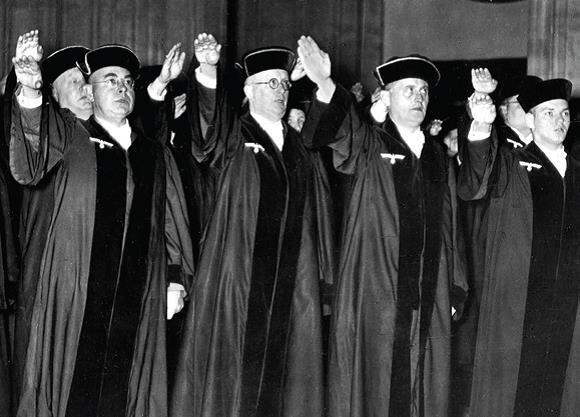
I’m reading a novel, “A Gentleman in Moscow,” about a fictional Russian Count charged as a “social parasite” before a Bolshevik tribunal. There is one passage in the book that relates directly to my post today. The Count was being held in a luxury hotel in Moscow, one floor above the rooms in which the All-Russian Executive Committee had met in 1918 to draft the new Bolshevik constitution. Three articles of that constitution guaranteed Russians rights and one, exceptions to those rights, were excerpted in the book:
Article 13: Freedom of Conscience;
Article 14: Freedom of Expression;
Article 15: Freedom of Assembly; and
Article 23: Freedom to have any of those rights revoked should they be “utilized to the detriment of the socialist revolution.”
Did the Founding Fathers miss something? Do you agree that, with a little editing, the Bolshevik Constitution’s Article 23 would make sense here and now in America? Or, are you, I and the rest of us content to sit back while people like Graham, Gableman, Trump and others continue use their right-wing soap boxes to whip their followers into such a frenzy that another January 6…or worse…is on the American horizon?
Three little former Soviet Socialist “Republics” and one large, but sparsely populated country have never been so significant.
Now where was I…until my trip posting was rudely interrupted by “Judge” Aileen M. Cannon and her Special Master ruling, one of the most criticized rulings since, well, since”Justice” Samuel Alito’s majority opinion overturning Roe v. Wade, settled law for close to 50 years. “Once you have the courts you can pretty much do whatever you want.”
But, I digress. Back to cruising the Baltic.
Lithuania, Latvia and Estonia, all formerly independent countries which were annexed by the Soviet Union after World War II, eventually becoming independent countries again after the fall of the Soviet Union. They are commonly recognized as the “Baltic States.” Each of these republics has less than 1.5 million people. Each is distinctly different from the others. And each is a member of both the EU and NATO…the key reason, despite Putin’s desires, that the three have not been invaded by Russian, to suffer the fate of Ukraine.
Lithuania
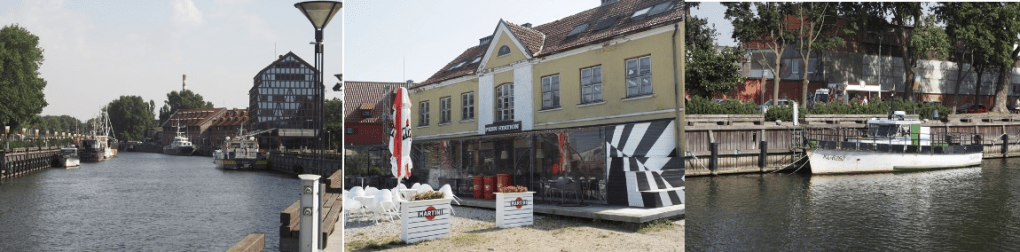
Klaipeda images
We visited, in order, Klaipeda Lithuania and the capitols of Latvia and Estonia, Riga and Tallinn, respectively. The port call in Klaipeda, Lithuania’s major seaport on the Baltic was interesting, but not as interesting as the country’s inland capital, Vilnius, would have been. (If for no other reason a visit to the Lithuanian capitol would have been rewarded with a better understanding of the city’s various names. Depending on which major power was in charge, the name of the city changed – Polish: Wilno, Belarusian: Вiльня (Vilnia), German: Wilna, Latvian: Viļņa, Ukrainian: Вільно (Vilno), Yiddish: ווילנע (Vilne). Vilnius’ naming history aptly sums up the difference between Lithuania and it’s sister Baltic republics; its ties, voluntary or not, were much stronger to Russia, Poland and Germany than either Latvia or Estonia. And with regard to Jewish history, before World War II, Vilnius was one of the largest Jewish centers in Europe. Its Jewish influence led to its nickname “the Jerusalem of Lithuania.” Even Napoleon referred to it as the “Jerusalem of the North.”
Latvia
Riga, Latvia’s capitol, is a fantastically beautiful city, named European capitol of culture in 2014 and home of more than 1/3 of Latvia’s total population of about 1.9 million. It’s the capitol of a country that successfully overcame Soviet domination to become both an EU and NATO member, ranking very high in the Human Development Index, and performing favorably in measurements of civil liberties, press freedom, internet freedom, democratic governance, living standards, and peacefulness.
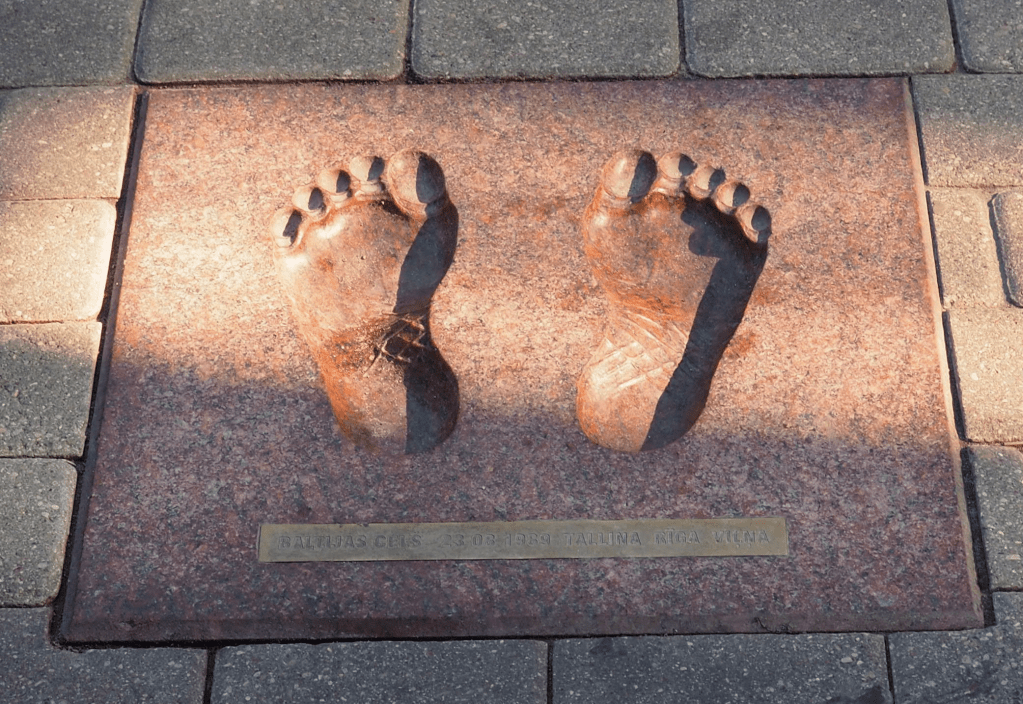
Besides the many photos of wonderful buildings, statues and sites I took in Riga, the memorial that moved me the most was the one below, commemorating the “Baltic Chain,” also known as the “Chain of Freedom,” a peaceful political demonstration that occurred on 23 August 1989 when approximately two million people joined their hands to form a human chain spanning 690 kilometers (430 mi) across the three Baltic states of Estonia, Latvia and Lithuania, protesting their unwilling status as Soviet Socialist Republics (SSR) of the Soviet Union.
Actual images of the Baltic Chain:
On March 11, 1990, seven months after the Baltic Chain, Lithuania became the first Soviet state to declare independence. The independence of all three Baltic states was recognized by most western countries by the end of 1991.
Estonia
Estonia, the northernmost of the Baltic republics has more in common with Finland than it does with either Latvia or Lithuania. Tallinn, the lovely capital city, is only a short ferry ride to Helsinki across the Gulf of Finland; many Estonians make that ride every day to higher paying jobs in the Finnish capitol. The languages, known as Balto-Finnic, are similar; while in the west we naturally place Estonia into the geographic group known as the Baltics, many Estonians identify as a Nordic country, tied more to Finland, then the Baltics. In fact, in answer to a question put to an Estonian I met…”the three Baltics are joined together geographically with very small populations (less than 2 million each), wouldn’t it make sense to join together as one, larger, more significant country,” the answer was, “Why, our commonality stops at the border.”
Tallinn’s old town is magical, noted particularly for housing Raeapteek (Town Hall Pharmacy), which opened in 1422 and claims to be the oldest continuously running pharmacy in Europe. Traditional, but I’m told recently discontinued remedies included, snakeskin potion, mummy juice and powdered unicorn horn (for male potency).
Finland
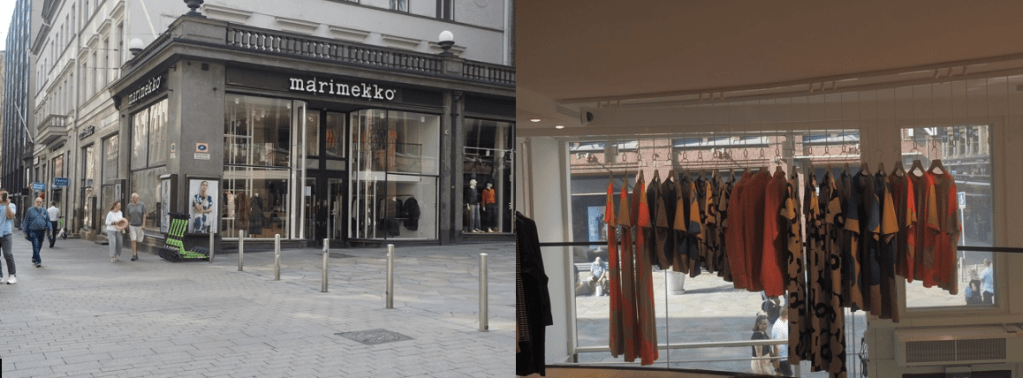
Our brief stop in Helsinki consisted mostly of shopping. Of particular interest was the presence of a retailer who, to my amazement, is still “a thing.”
Many readers of a certain age are familiar with the Finnish design brand Marimekko. I’m sure many of us had at least one Marimekko fabric stretched on a wood frame hanging in the 1970’s era living room.
There are several Marimekko shops in Helsinki selling not just fabric, but really stylish women’s attire…some of which, not suprisingly, we brought home.
Given current world affairs, our visit to Helsinki couldn’t have been more timely. With Finland’s soon-to-be membership in NATO, its, and neighboring Estonia’s strategic importance couldn’t be greater as entry into the major Russian seaport of St. Petersburg requires shipping to pass through the narrow passage between the two allies.
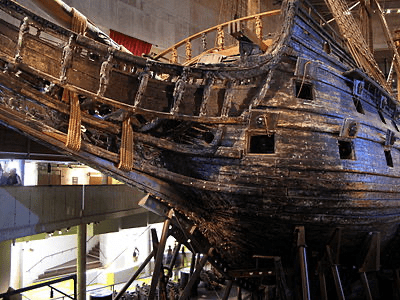
Our cruise adventure ended in Stockholm, spending two days there. Besides taking in the beauty of this city of islands, we had a choice of two major museums to visit. One, the Vasa Museum is a maritime museum that displays the only almost fully intact 17th-century ship that has ever been salvaged, the 64-gun warship Vasa that sank on her maiden voyage in 1628. The Vasa Museum opened in 1990 and, according to the official website, is the most visited museum in Scandinavia.
The other was the ABBA Museum, the homage to one of the greatest pop groups of all time and still today, with Volvo owned by a Chinese company and Saab run into the ground by General Motors, Sweden’s second biggest export, after IKEA.
The choice was easy. View a ship that sunk two days after launching or walk around the rest of the day humming “Mama Mia.” Weeks later, I’m still humming.
By the way, the visit to Stockholm brought back memories of one of my last business trips to the Swedish capitol. It was in December 1985. I was traveling with my client promoting the sales of California raisins in Europe. At dinner in a lovely Stockholm restaurant, I couldn’t help but notice a menu item I hadn’t seen before: grilled reindeer steak. Unable to resist this treat, I ordered it. That night, not sure if it was the steak or too many shots of Absolut vodka, I couldn’t sleep, the image of the next morning’s Swedish newspapers feeding my insomnia:
Is the Trump-appointed federal district judge’s ruling calling for a “special master” while simultaneously directing the Department of Justice to stop any further investigation of Trump’s absconding with classified documents “proof of the [offal] pudding?
(Note: Around the Block’s coverage of my Baltic cruise followed by an incredible stay in Krakow, Poland will continue later this week.)
The headlined quote comes philosopher Jason Stanley of Yale University, best known for his 2018 book “How Fascism Works.” It was one of many statements of outrage Heather Cox Richardson quoted in her newsletter today, Letters from an American.
As Cox Richardson pointed out, “Legal analysts appear to be appalled by the poor quality of the opinion.”
Former U.S. acting solicitor general Neal Katyal called it “so bad it’s hard to know where to begin.”
Law professor Stephen Vladeck told Charlie Savage of the New York Times that it was “an unprecedented intervention…into the middle of an ongoing federal criminal and national security investigation.”
Paul Rosenzweig, a prosecutor in the independent counsel investigation of Bill Clinton, told Savage it was “a genuinely unprecedented decision” and said stopping the criminal investigation was “simply untenable.”
Duke University law professor Samuel Buell added: “To any lawyer with serious federal criminal court experience…, this ruling is laughably bad…. Trump is getting something no one else ever gets in federal court, he’s getting it for no good reason, and it will not in the slightest reduce the ongoing howls that he’s being persecuted, when he is being privileged.”
Going on, Cox Richardson notes, “Energy and politics reporter David Roberts of Volts pointed out that this is a common pattern for MAGA Republicans. First, they spread lies and conspiracy theories, then they act based on the ‘appearance’ that something is shady. So this… judge says Trump deserves extraordinary, unprecedented latitude because of the ‘extraordinary circumstances’ and the ‘swirling questions about bias.’ But her fellow reactionaries were the only ones raising questions of bias! It’s a perfectly sealed feedback loop, and one the right wing has perfected over voter fraud.”
Cox Richardson goes on to assert, “As Republican policies grew less popular, party leaders focused not on adjusting their policies, but on filling judgeships with judges who would rule in their favor in lawsuits. This focus was so strong by the time of Trump’s predecessor, President Barack Obama, that then–Senate majority leader Mitch McConnell (R-KY) stalled confirmations for Obama’s nominees, banking on leaving vacancies for a new president to fill. Most dramatically, of course, he refused to permit a hearing for Obama’s nominee for a Supreme Court seat in March 2016, inventing a new rule that that date was too close to the upcoming November election to allow the nomination to proceed. (A rule McConnell completely disregarded when it came to the seat now occupied by Amy Coney Barrett.)
“This left the seat free for Trump to appoint Neil Gorsuch, who could not make it through the Senate until McConnell used the so-called “nuclear option” to get rid of the filibuster for Supreme Court appointments, which enabled him to squeak through with just 51 votes.”
Lest we forget, the judge in the Trump case, Aileen M. Cannon, a member of the Federalist Society, was confirmed by the Senate on November 13, 2020 after Trump had lost the election. In her ruling she stepped between the Department of Justice and the former president in the investigation of classified documents stolen from the government. Before she ruled, even conservative lawyers were critical of Trump’s position.
Orin Kerr, a conservative law professor at UC Berkeley noted that many actual lawyers were “giggling at Trump’s motion, and how poorly it was done.” Former Attorney General William Barr, a former Trump ally, was asked for his opinion about the argument for a special master. “I think it’s a crock of s—,” he said, adding, “I don’t think a special master is called for.”
Beyond the opinions quoted in Cox Richardson’s letter, other experts chimed in on Cannon’s ruling. Peter Shane, a legal scholar at NYU and a specialist in separation of powers, told The New York Times yesterday, “The opinion seems oblivious to the nature of executive privilege.”
Stephen Vladeck, a law professor at University of Texas, called the outcome “preposterous,” adding that yesterday was “a sad day“ for the judiciary. And Andrew Weissman, a longtime Justice Department veteran described the ruling as “lawless“ and “nutty.”
And although former acting solicitor general Neal Katyal initially didn’t know where to begin, he ultimately found a way, going on to describe Cannon’s legal analysis as “terrible” and “awful,” before concluding, “Frankly, any of my first year law students would have written a better opinion.”
Is Judge Cannon a living breathing example of “Once you have the courts you can pretty much do whatever you want?”
Or as Florida’s senior U.S. Senator Marco Rubio, who Trump once denigrated as “Little Marco,” said, implying this is a lot to do about nothing, “This is just a storage issue.”
Honoring Solidarity is the reason to visit Gdańsk; the city’s restored Stare Miasto (Old Town) is the “Icing on the cake!”
Although I’ve traveled to Poland many times, I’d never been to Gdańsk, Poland’s Baltic Sea port in the north of the country. Home to Poland’s shipyards, the city is most famous as the home of Solidarity, the Polish trade union founded in August 1980, at the Lenin Shipyards by Lech Wałęsa and others. Solidarity became the first independent labor union in a Soviet-bloc country, giving rise to a broad, non-violent, anti-Communist social movement that, at its height, claimed some 9.4 million members. Not only did Solidarity hasten Poland’s transformation into a modern democratic state, Solidarity represented a break in the hard-line stance of the government-run Communist Polish United Workers’ Party. Solidarity was an unprecedented event, not only for the People’s Republic of Poland—a satellite of the Soviet Union ruled by a one-party Communist state—but for the whole of the Eastern Bloc. Solidarity’s example led to the spread of anti-Communist ideas and movements throughout the Eastern Bloc, weakening Communist governments. Solidarity is considered by many to have contributed greatly to the Fall of Communism 10 years later.
Photos from the Solidarity Museum
After visiting the Solidarity Museum, we strolled Old Town. It was a revelation; my expectation was that Gdańsk was simply going to be a grungy, industrial city.
Boy, was I surprised!
Gdańsk Old Town
Of Poland’s major cities, both Warsaw, in the center of the country, and Gdańsk, in the north, were destroyed by the retreating German armies, with upwards of 90% of each city laid to waste. Only Krakow escaped such devastation as the Germans were not pursued by the Red Army that far south. Old towns in both Warsaw and Gdańsk have been studiously recreated; Gdańsk’s is one of the best restorations I’ve ever seen.
Of course, one of the special features of the restored Old Town are the flowers and the trees, providing me with the perfect opportunity to digress.
Gdańsk Stare Miasto
I have been following the news back home and I understand that while trees add to the beauty of Gdańsk’s Stare Miasto, they’ve (trees) have become quite controversial at home. At least to Herschel Walker, the Republican candidate for U.S. Senate from Georgia.
Last Sunday, apparently, Walker came out against trees.
Democrats such as President Biden and [Walker’s opponent] Sen. Raphael Warnock (D-Ga.), Walker declared, “try to fool you like they’re helping you out, but they’re not. They’re not helping you out, because a lot of the money is going into trees. You know that, don’t you? It’s going into trees. We’ve got enough trees. Don’t we have enough trees around here?”
As The Washington Post’s Dana Milbank opined, “Finally, a politician with the guts to speak the obvious, painful truth: This country has too many damned trees. And we need to start deporting them.”
Of course, Walker’s scientific bonafides aren’t limited to trees.
Milbank: “[Walker] noted last month that when ‘good air’ from the United States ‘decides to float over to China,’ it is replaced by ‘bad air’ from China and ‘we got to clean that back up.’ Walker previously discovered the existence of a ‘dry mist’ that ‘will kill any covid on your body.’ And he was able to disprove Charles Darwin’s theory of evolution by observing that ‘there still [are] apes’ that have not turned into humans.
As he admonished us less scientific types, “Think about that!”
Let me close with this: Recent polls suggest the Warnock/Walker contest is a toss-up.
Really?
Really!
Having just recently visited Copenhagen, I can safely paraphrase the Bard with this:
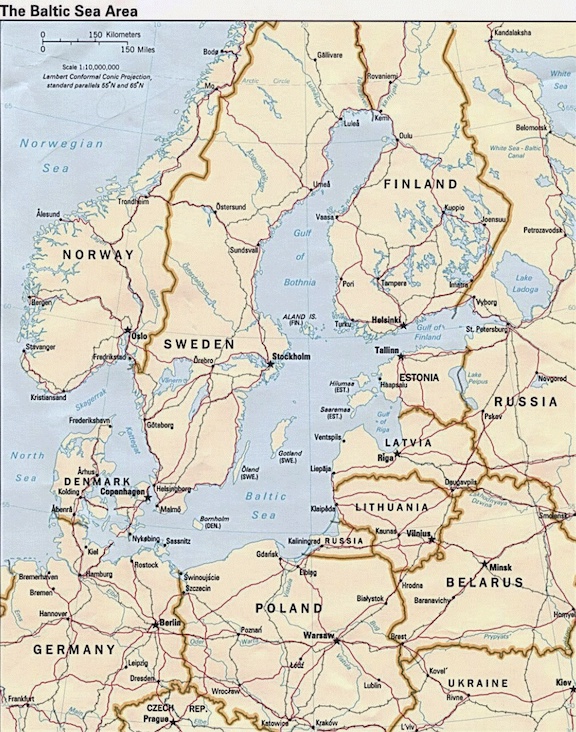
Sharon and I are cruising the Baltic sea for the next week. The cruise started in Copenhagen with port calls in Karlskroner, Sweden, Gdansk, Poland, Klaipeda, Lithuania (only about 50kms from the Russian Oblast known as Kaliningrad), Riga, Latvia, Tallinn, Estonia, Helsinki and Stockholm. From Stockholm we’ll fly to Krakow to visit friends.
With all this travel, Around the Block will probably focus less on news and politics (although if I’m amused and/or outraged by something or someone, I might have to opine), and more on observations from this trip.
Here are two quick ones.
Copenhagen
Copenhagen, which I’ve been to many time for both business and pleasure, remains a delightful, albeit expensive, city. The food scene is first rate, the people are friendly, the architecture eclectic, shopping, particularly on Strøget, one of the first pedestrian city-center shopping streets is a pleasure, and Tivoli Gardens remains the greatest amusement park in the world.
But anyone who hasn’t visited Copenhagen in a while, which includes me, as my last visit was probably over 20 years ago, will be struck by one amazing observation and one incredible fact.
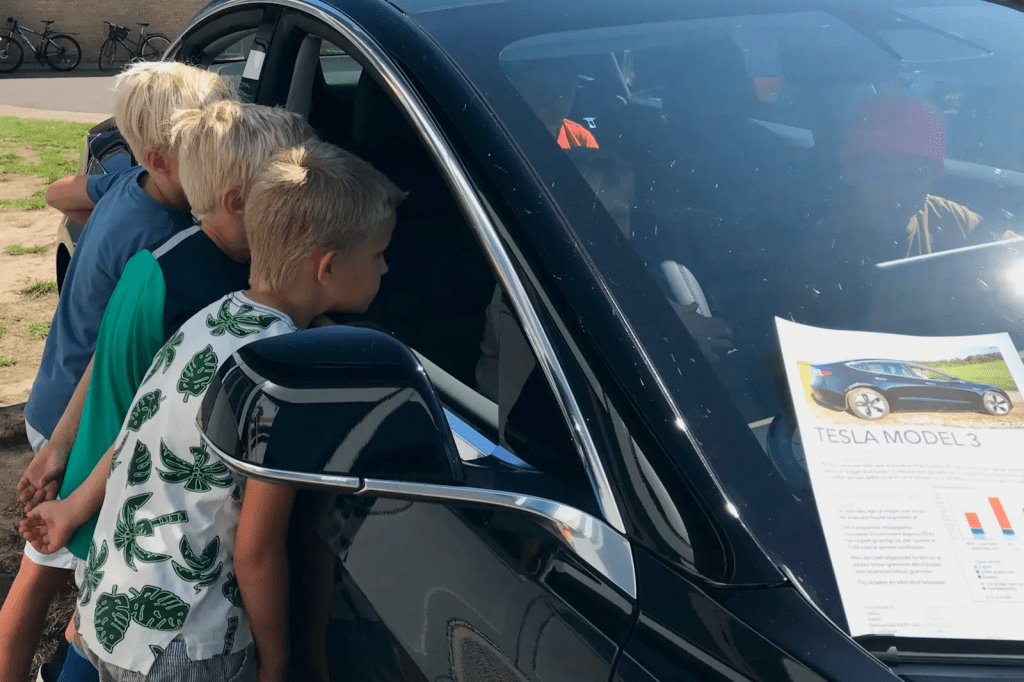
Danish boys ogling a Tesla
Observation: Strolling the streets of Copenhagen I noticed a huge difference between cars in Denmark and cars at home: something like one out of four to five cars on the streets of the city are electric (EVs) or plug-in hybrids (PHEVs) or simply hybrids. Amazing!
CleanTechnica:Denmark Crushes 50% EV Sales Barrier
Fact: According to the website, CleanTechnica, 50% of new cars sold in Denmark are now either EVs (27%) or PHEVs (31%). And there are dozens of EV models from both European (particularly VW and Fiat) and Korean (Hyundai and Kia) manufacturers sold in Denmark but not available in the U.S. Why are the Danes doing the right thing while we can’t even get the EVs that are ostensibly available in the U.S. into American auto dealer showrooms? Is this just another example of American Exceptionalism?
Karlskroner, Sweden
Karlskroner is a small town in Southeast Sweden known mostly as the headquarters of the Swedish navy. It was probably added to Baltic cruise itineraries when St. Petersburg, Russia, for obvious reasons, was taken off the port call list. Normally I wouldn’t report on a stop in a town like Karlskroner because, frankly, there’s not much to report. But whenever I visit a foreign city I often think, “is this a place I’d like to live in.” After visiting this house in this heritage neighborhood, Karlskroner did not make the shortlist.
Two rooms…sewing room which doubles as a bedroom, separated from the dining room by a tiny kitchen (sink, mini-bar sized fridge, 2 burner stove) with an outhouse toilet/shower…asking price: €600,000.
And you thought San Francisco was pricey!
But more important than real estate prices is what I learned about Sweden’s military now that it will be joining NATO. While the few Swedish navy destroyers I saw looked impressive, I thought folks at home would like to see what Sweden will be bringing to the party to enhance NATO’s ground forces:
Swedish soldiers guarding the port.
Take that, Putin!
Next stop Gdansk, home of Polish solidarity. More to come.
…and The Palm Beach Post hasn’t had so much prominence since, well, “hanging chads.”
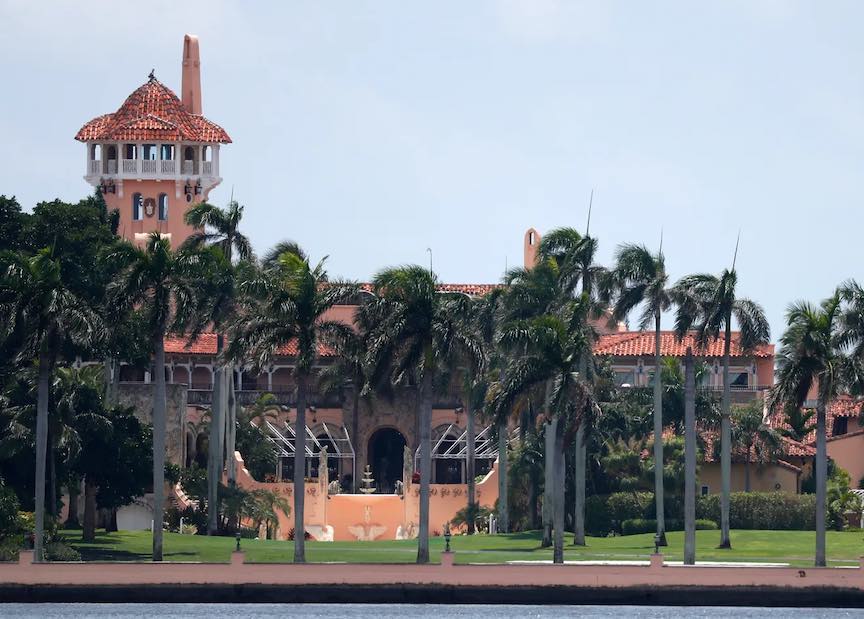
Since last week’s FBI “raid” (“Trumpworld”word, not mine) on the former president’s home/country club/winter White House/top-secret storage facility, Mar-a-Lago, Palm Beach County has become news of the day ground zero as evidenced by these recent Page One headlines from the Palm Beach Post.



















 Around the Block