Commentary/Nostalgia
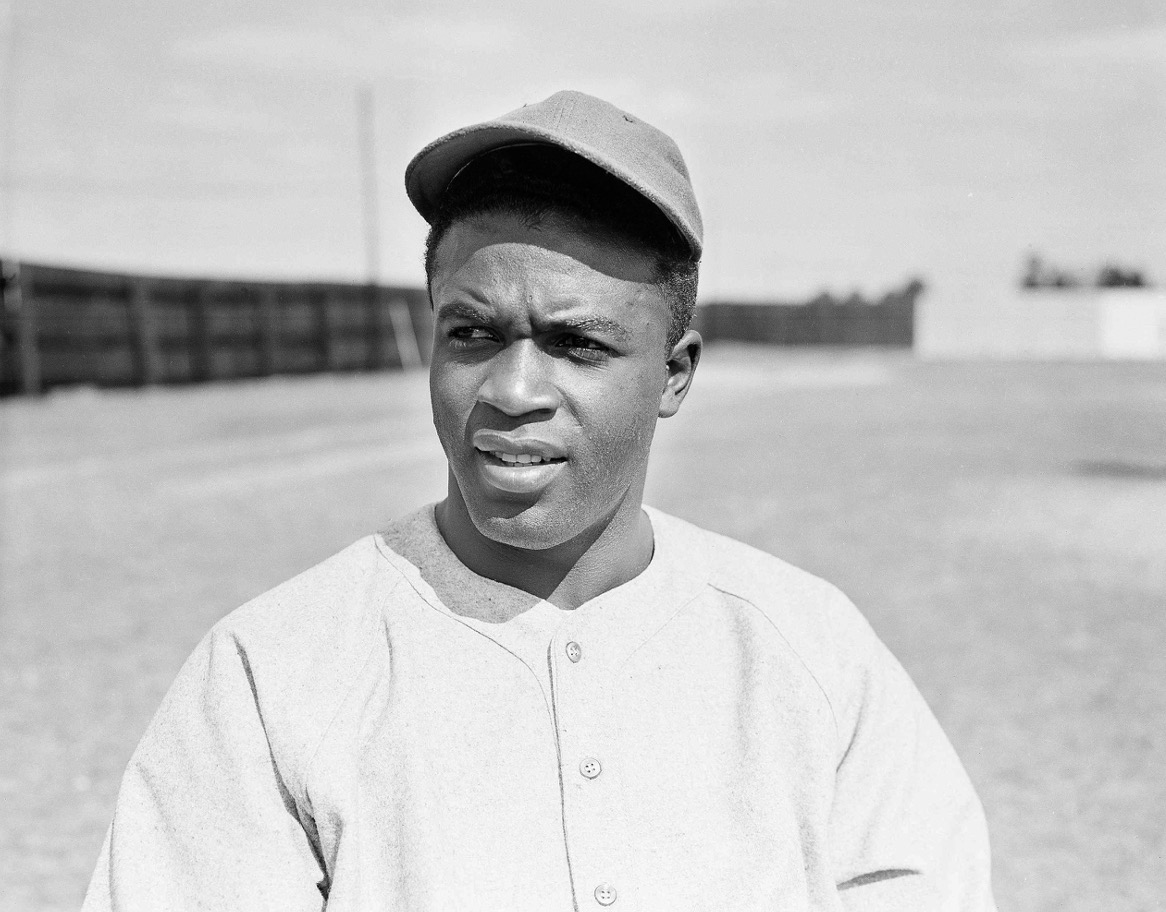
By day, he played second base for the Brooklyn Dodgers. By night, he sold televisions in Queens.
I thought I’d take a break from my typical current events focussed commentary to reprint an article originally published in The New Yorker magazine on January 7, 1950 with the original headline “Success.”
In an era before multi-year mega-million dollar sports contracts, this is a must-read story for every sports fan – particularly those of us who grew up in NY/NJ in the 40s and ‘50s following the Dodgers, Giants or Yankees.
Jackie Robinson, the man who broke the color barrier that changed baseball and, possibly all professional sports forever, the 1949 National League MVP, the man who is so revered that his uniform number, 42, has been retired by every team in Major League Baseball was, in 1950, selling TVs and appliances in a store in Rego Park Queens!
Success
January 7, 1950
On learning that Jackie Robinson, the Brooklyn Dodgers’ second baseman, is
spending Monday, Wednesday, and Friday evenings each week as a television-set
salesman in the Sunset Appliance Store in Rego Park, Queens, we hurried over to
the place to see how he is making out. From a talk we had with Joseph Rudnick,
president of Sunset, just before Robinson appeared, we learned that he is
making out fine. Rudnick, a small, alert-looking man, graying at the temples,
whom we found in an office on a balcony at the rear of the store, informed us
that the accomplished young man had been working there, on a
salary-and-commission basis, for five weeks, and that if he liked, he could
work there forever, the year around. “Business booming like wildfire since Jackie
came,” Rudnick told us, looking down at a throng milling about among television
sets, washing machines, and refrigerators. “Sports fans flocking in here,” he
said with satisfaction. “Young persons, curious about the National League’s
Most Valuable Player and one of the best base-stealers since Max Carey. Jackie
signs baseballs for them and explains about the double steal. Since he’s been
here, he’s sold sets to Joe Louis and Sugar Ray Robinson, among others. The
newsreel people shot him selling a set to a customer. He’s a natural salesman,
with a natural modesty that appeals to buyers. The salesman wrapped up in
himself makes a very small package. Campanella, Hodges, and Barney dropped by
to wish him luck. Campanella’s his roomy. There’s Jackie now! With his business
agent.” Robinson and a bigger, more strapping man with a florid face were
making their way along the floor, the big man in the lead. “He’ll be right up,”
Rudnick said. “Hangs his coat here. One other thing we do,” he went on, “when a
bar buys a television set, we send Gene Stanlee over to the bar—the wrestler.
Mr. America.”
Robinson and his manager for radio and television appearances came up, and
we were introduced, learning that the latter’s name is Harry Solow. “Jackie
don’t have to lay awake nights worrying about his condition, bucking that mob
three times a week,” Solow said. Rudnick told us that Solow also manages Joe
Franklin and Symphony Sid, and Solow explained that they are radio
personalities. “Jackie’s all lined up for his own radio program,” he continued.
“He’s mostly interested in boys’ work, though. Spends all his spare time at the
Harlem Y.M.C.A.” “How I keep in shape is playing games with kids,” Robinson
said in a well-modulated voice. “When I quit baseball, I intend to give it full
time.” We learned that the Robinsons have a television set with a sixteen-inch
screen and that their only child, three-year-old Jackie, Jr., likes Howdy
Doody, Mr. I. Magination, and Farmer Gray better than anything else on
video. As Robinson was about to go down to the main floor, it occurred to us to
ask him if he’d developed any special sales technique. He looked surprised and
replied that he didn’t think so. “If a customer is going to buy a set, he’s
going to buy it,” he said philosophically. “You can’t twist his arm.” “On the
other hand,” Rudnick observed, “the right angle for a salesman is the
try-angle.”
We bade Rudnick and Solow goodbye and followed Robinson downstairs. A short
man in a heavy overcoat got him first. He wanted to see a twelve-inch set.
“There’s a bunch of them in the basement,” Robinson told him. “All playing at
once.” He led the man down to the basement. We followed. It was quite dark
there, but we could make out rows and rows of sets and see customers being
herded from one model to another by spirited salesmen. Robinson conducted his
man to a twelve-inch set, turned it on, adjusted the picture, and in rather a
shout, to get his voice above the hubbub of the amplifiers, named the price and
outlined the guarantee. “I like it!” the man hollered. “Could my wife work
it—all those knobs?” “A child could work it,” said Robinson, and it was a deal.
 Around the Block
Very interesting. Never knew that. Grew up in theBronx, was a rabid Giant fan, but admired Jackie and several other Dodgers. Gene
>
LikeLike
You grew up in The Bronx as a rabid Giants fan? No worries — I grew up in Brooklyn and was a rabid Yankees fan. Guess we both must have missed geography and/or NYC history. LOL! Ted
LikeLike
Thanks Ted, great story.. History of time we know, but forgot, helps me especially to remember. I really enjoy this kind of reach back to all of the sports events, as well as other historic events, that are lost.
LikeLike